Open Source

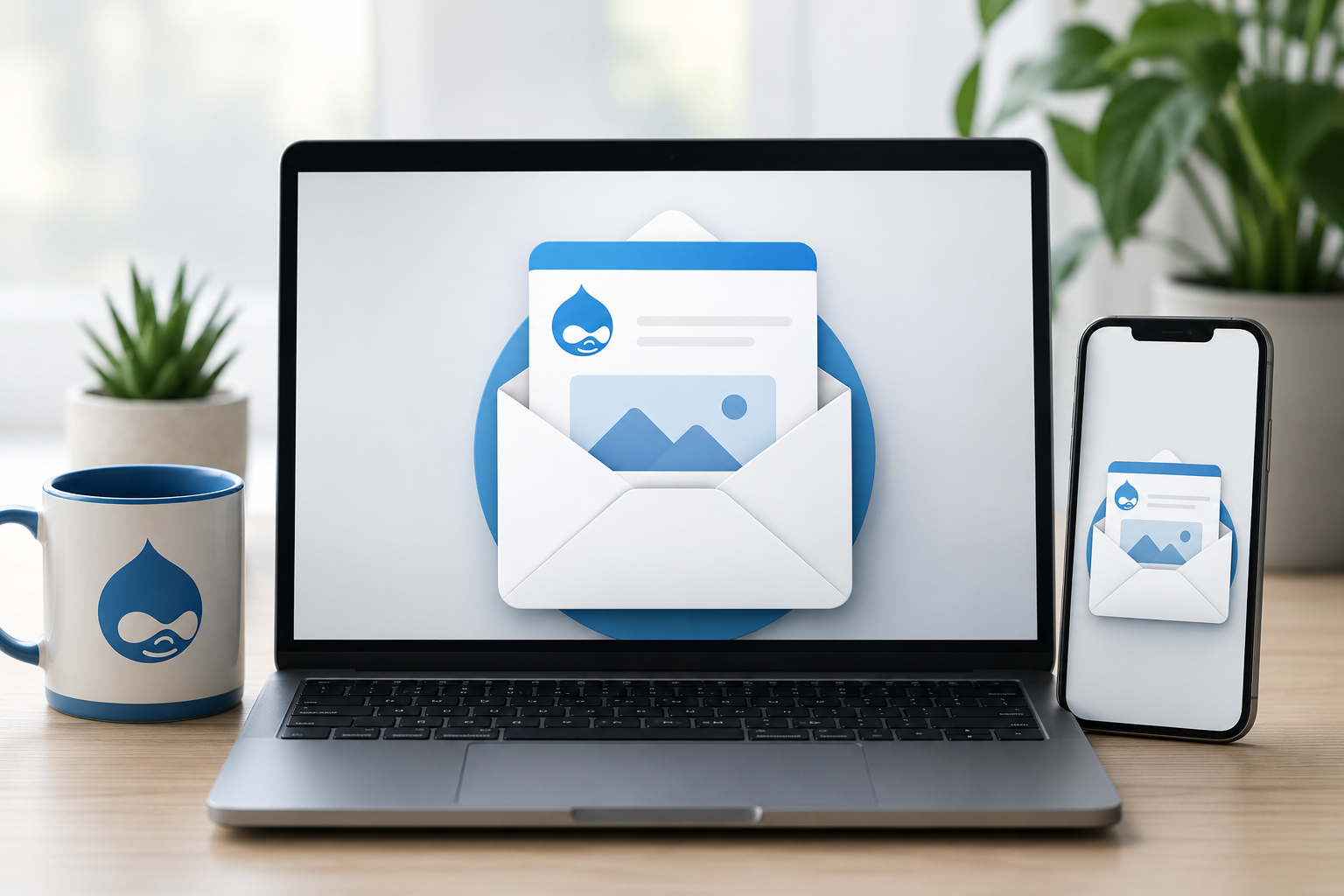
While upgrading my site to Drupal 11 and migrating forms to Webform, I discovered that my emails were still being sent as plain text. Looking for a quick solution, I turned to the Easy Email Express recipe, which made it simple to install and configure Easy Email and start sending branded HTML emails in minutes. In this post, I share my experience using the recipe, a small Mailgun configuration tweak I needed to make, and an iOS rendering issue I uncovered along the way.

Recently I upgraded this site from Drupal 10 to Drupal 11. While I've been through my share of Drupal upgrades over the years, this one stood out for a different reason: it was surprisingly straightforward.

Like many Drupal site owners, I started with the Upgrade Status module. Before touching core, I wanted a clear picture of what needed attention. Upgrade Status did exactly what it was designed to do, identifying deprecated code and highlighting modules that weren't quite ready for Drupal 11.
Throughout my career, I have been fortunate to work with many organizations of various sizes on a variety of projects. All of these projects had open source software at their core, and most contributed what they could back to the open source community. I recently worked on a greenfield project using open source software within a large organization. After the MVP phase of the project, the organization's leadership was interested in learning what led to project success and how they could apply it to other teams across the organization.

At this year's DrupalCon North America, EPAM Solution Architect John Picozzi presented a talk about the importance of non-code contribution. He talked about how everyone can get involved and why he believes this is an important topic. This article is a text adaptation of John's talk; find a link below to a video recording of the complete presentation at DrupalCon.