
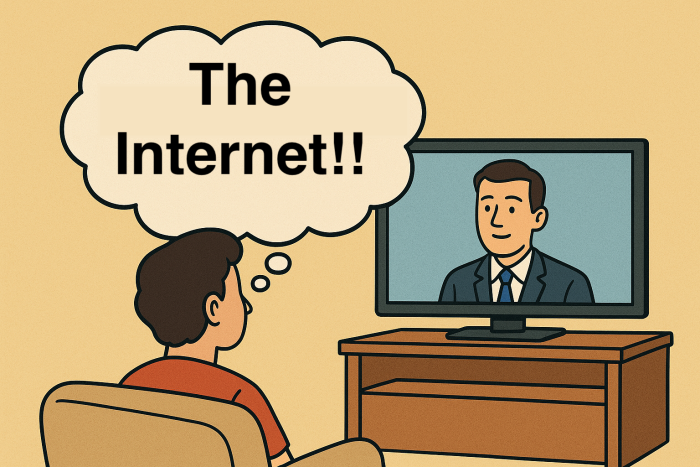
Over the weekend, I did something I don’t often have time to do: I watched Meet the Press. I find the show gives interesting insights from both sides, and the host does a great job asking the hard questions. Sundays episode focused heavily on the current state of the country and acts of political violence.
I think we can all agree—political violence is never acceptable. As a nation, we should be better than that. With that said, this post isn’t going to be political or take sides, so if that’s what you’re looking for, I’m sorry to disappoint.
What caught my attention while watching this week’s show was how guests—Democrats and Republicans alike—talked about the role of “the internet.” Many claimed the internet itself was the problem, that people committing violent acts were hiding in its “dark corners.”
Some guests even called this a crossroads, placing blame squarely on the internet and the big tech companies behind it.
As someone who spends a huge amount of time online and whose career depends on the internet, I think we need to be precise here. The problem isn’t the internet as a whole—it’s a subset of it specifically: social media.
But that’s only part of the issue. What struck me most was what didn’t get mentioned. The Republican governor, the Democratic senator, the Republican senator, the Democratic former mayor and transportation secretary, and even the host all failed to highlight two major factors fueling this crisis: the overwhelming mental health crisis and the proliferation of firearms.
These two issues got no airtime. Instead, the conversation was pushed toward partisan politics, geopolitical agendas, and, unfortunately, attacks on what I’d argue is the greatest invention of my lifetime—the internet.
Let me be clear: the internet as a whole is not the problem. A subset—social media—is where the real issues live. One panelist on Meet the Press put it well: our human brains simply aren’t equipped to handle the flood of information, especially misinformation, that social media delivers. That comment sums it up perfectly.
We shouldn’t generalize the problem as “the internet.” Instead, we should be precise in naming the issues—whether it’s the early childhood use of social media, the abundance of misinformation, the rapid spread of toxic content, or the lack of checks and balances on these platforms.
As someone who works on the internet every day and understands both its power and potential, I believe we need to do a better job regulating social media—making sure false information is addressed quickly and that kids aren’t exposed to platforms that could be detrimental to them. But social media is only part of the picture; we also need stronger mental health services for every American and common-sense gun laws to protect us all.
In closing, no matter your politics, we should be able to agree on this: violence is never the answer. We need to strive to do better, put laws in place that address the real issues, and be clear about identifying the true root causes. I’ll say it again—social media, not the internet as a whole, is only part of the problem, and violence is never the answer!


